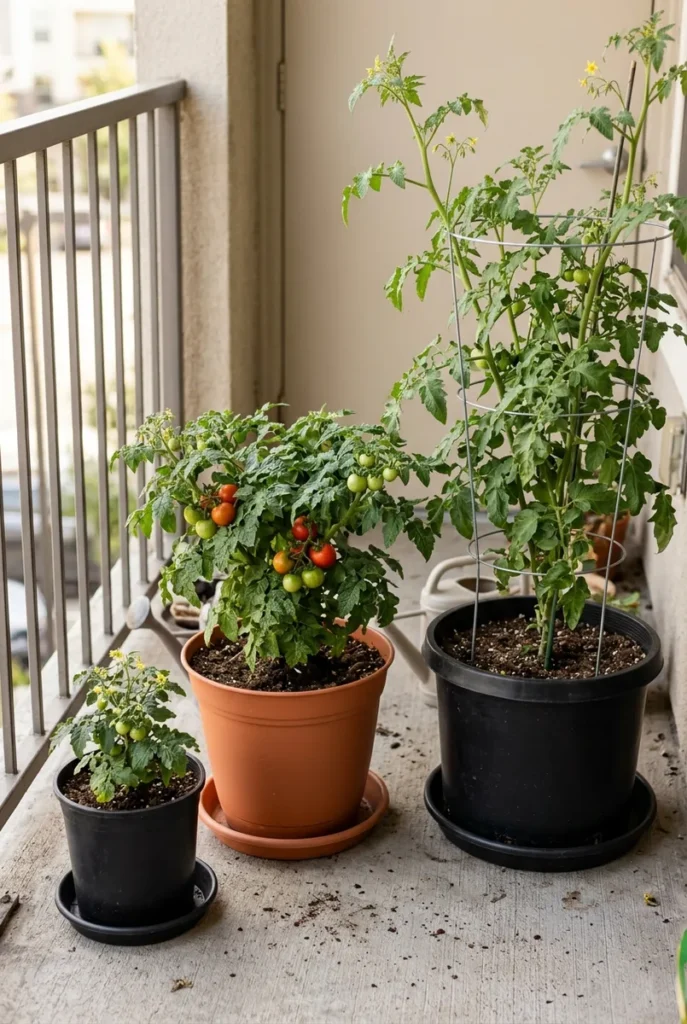
For one tomato plant, a 5 gallon pot is the usual minimum for a determinate (bush) tomato, and 10 gallons or more is better for an indeterminate (vining) tomato. Compact cherry and dwarf types can get by in 2 to 3 gallons. If you are stuck between two sizes, pick the bigger pot.
Key points
- Tomato pot size depends on the type of tomato.
- A determinate (bush or patio) tomato needs at least a 5 gallon pot, and an indeterminate (vining) tomato does better in 10 gallons or more.
- Compact and dwarf cherry tomatoes can grow in 2 to 3 gallons.
- Use a pot at least 12 inches deep with drainage holes, and when in doubt pick the bigger size.
Related guides
Tomato container size chart
Start with the plant tag. “Determinate,” “patio,” and “dwarf” mean the plant stops at a set size. “Indeterminate” means the vine keeps growing until frost. Oregon State University Extension describes determinate tomatoes as about 3 to 4 feet tall and bushy, which is why they suit containers.
The minimums below come from extension guides. The “better” column is what to buy if you have the room.
| Tomato type | Minimum pot | Better pot | Depth |
|---|---|---|---|
| Dwarf or micro cherry | 1 gallon | 2 to 3 gallons | 6 to 9 inches minimum |
| Determinate or patio cherry | 2 gallons (about 10 inches across) | 3 to 5 gallons | 12 to 18 inches |
| Indeterminate cherry (Sungold type vines) | 5 gallons | 10 gallons | 18 to 24 inches |
| Determinate slicer or paste | 4 to 5 gallons (12 to 14 inches across) | 7 to 10 gallons | 12 to 18 inches |
| Indeterminate slicer or beefsteak | 10 gallons | 15 gallons or more | 18 to 24 inches |
Sources for the chart: University of Tennessee Extension lists 1 gallon at 6 to 9 inches deep for dwarf cherry tomatoes, 3 gallons at 12 to 18 inches for cherry tomatoes, 5 gallons at 12 to 18 inches for determinate tomatoes, and 5 gallons or larger at 18 to 24 inches for indeterminate tomatoes. Iowa State University Extension gives at least 2 gallons (about a 10 inch pot) for a cherry tomato and at least 4 gallons (about 12 to 14 inches across) for a standard tomato. University of Georgia Extension lists 5 gallons per determinate plant and 10 gallons per indeterminate plant. The 15 gallon suggestion for big beefsteak vines follows the general extension advice that larger pots restrict growth less.
Why bigger is usually better
Oregon State says plainly that tomato growth is limited by container size, so the larger the container, the less restricted the plant and its harvest. University of Maryland Extension goes further: unless you grow a dwarf tomato, a plant in a 5 gallon pot tends to be spindly and not very productive. Their advice is to get bigger pots than you think you need and to use 10 gallons for an indeterminate tomato. They suggest saving 5 gallon pots for peppers or eggplant.
A bigger pot also holds more water. University of Tennessee Extension notes that small containers heat up and dry out faster, and that pots in hot sun can need water once a day or more. Iowa State links uneven watering to blossom end rot and cracked fruit, so a pot that dries out by mid afternoon makes both problems more likely.
What size pot for tomatoes in inches and liters
Pots are sold by gallons, liters, or inches across, and those numbers do not always match because pot shape varies. A wide, shallow bowl can hold the same volume as a narrow tall pot and still give roots less depth. Check depth as well as width.
| Pot size (US gallons) | About this many liters | Good for |
|---|---|---|
| 1 gallon | 3.8 liters | Dwarf or micro tomatoes only |
| 2 gallons | 7.6 liters | Compact cherry minimum |
| 3 gallons | 11.4 liters | Patio and determinate cherry |
| 5 gallons | 19 liters | Determinate slicers, paste types, vining cherries at minimum |
| 10 gallons | 38 liters | Indeterminate tomatoes |
| 15 gallons | 57 liters | Large beefsteak vines |
Conversions use 1 US gallon as about 3.8 liters. If you already have a planter and want to know how much mix it takes, the GardenDen potting mix calculator works it out for round pots, rectangular planters, and grow bags.
Signs a tomato pot is too small or too big
Too small:
- The pot dries out within a day in warm weather, even when you water well.
- Leaves wilt in the afternoon and recover overnight.
- Fruit cracks or gets blossom end rot from wet and dry swings.
- The plant tips over once it carries fruit.
Too big for the plant at the moment:
- A small seedling sits in a large pot of mix that stays wet for days in cool spring weather.
University of Tennessee Extension points out that big containers filled with a mostly peat mix can stay too wet around a young plant that is not using much water yet. Their fix is to use a coarser mix in larger containers and to water a young plant in a big pot lightly until it grows into the space. That is a reason to manage water carefully, not a reason to go smaller.
Drainage, potting mix, and sun
Every tomato pot needs drainage holes. Iowa State says to drill holes in plastic or wood containers that do not have them, and to avoid treated lumber if you build a wooden box. Fill the pot with a soilless potting mix rather than garden soil, which compacts in a container and drains poorly. Our guide to potting mix vs garden soil vs raised bed mix explains the difference.
Pot size will not make up for shade. Iowa State says tomatoes need at least 6 hours of direct sun a day. If your balcony gets less than that, see our small space garden design guide for crops that handle less light.
Leave room for a cage or stake
Vining tomatoes need support for the whole season. Iowa State recommends tomato cages at least 24 inches across, built from fencing with openings of at least 4 inches so you can reach the fruit. A cage that wide needs a pot wide enough to hold it, which is one more reason indeterminate types belong in 10 gallon pots or larger. If you stake instead, Iowa State suggests pruning to one or two main stems and tying them loosely to the stake.
On a balcony or patio, set the pot where it will stay all summer before you fill it. A 10 gallon pot of wet mix is hard to move.
Watering and feeding container tomatoes
Iowa State says container tomatoes dry out quickly from sun and wind and some need water every day. Water until it runs out the drainage holes, do not let the mix dry out completely, and avoid wetting the leaves late in the day. Our vegetable garden watering guide covers how to turn those checks into a routine.
Pots hold fewer nutrients than garden soil. Iowa State recommends a soluble fertilizer such as 20-20-20 or 15-30-15 every week or two, and notes that if your potting mix already contains slow release fertilizer, you may not need to start feeding until midsummer.
Checklist: picking a pot for one tomato plant
- Read the plant tag: dwarf, determinate (bush or patio), or indeterminate (vining).
- Match the pot to the chart: 2 to 3 gallons for compact cherries, 5 gallons or more for determinate, 10 gallons or more for indeterminate.
- Check depth: at least 12 inches for most tomatoes, 18 to 24 inches for vines.
- Confirm drainage holes, or drill them.
- Buy soilless potting mix, not garden soil, and work out how much with the calculator.
- Find a spot with at least 6 hours of direct sun.
- Plan the cage or stake before planting.
- Place the pot in its final spot before you fill and water it.
Planning a first vegetable bed as well as pots? Start with how to start a vegetable garden from scratch.
Frequently Asked Questions
Is a 5 gallon bucket big enough for a tomato plant?
For a determinate or patio tomato, yes. University of Georgia Extension lists 5 gallons per determinate plant. For an indeterminate vine, 5 gallons is the bare minimum, and University of Maryland Extension recommends 10 gallons. Drill drainage holes in the bottom of any bucket.
What size pot for cherry tomatoes?
Compact and determinate cherry tomatoes need at least 2 gallons per Iowa State, and 3 gallons at 12 to 18 inches deep per University of Tennessee. Vining cherry tomatoes such as Sungold grow large and do better in 10 gallons.
Can I put two tomato plants in one pot?
The sizes in this guide are per plant. Two determinate tomatoes need about 10 gallons between them, and two vining tomatoes need about 20. One plant per pot is easier to water and support.
Are grow bags or plastic pots better for tomatoes?
Either works if the volume is right and water drains freely. University of Tennessee notes that container type and color affect how fast the mix heats and dries, so check fabric bags and dark pots in full sun more often.
How deep should a tomato pot be?
At least 12 inches for determinate types, per Oregon State, and 18 to 24 inches for indeterminate vines, per University of Tennessee.