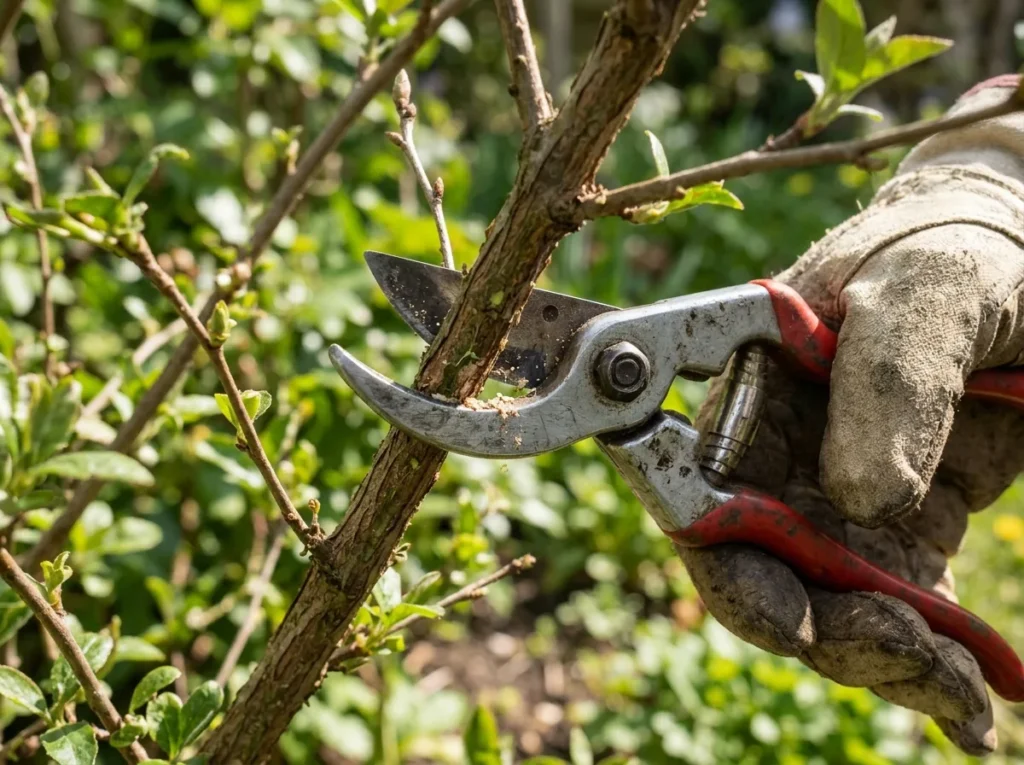
Comfort in a pruning shear is not a luxury trim. If the handles bruise your palm, if the spring is stiff, or if you have to twist your wrist to get the blades around a stem, you will make worse cuts and stop sooner. This guide looks at four tools you can still find on Amazon, chosen for comfort and control: the Felco F-2, the Corona BP 3180D, the Fiskars bypass pruner, and the Fiskars Softouch micro-tip snip.
As an Amazon Associate, The Garden Den earns from qualifying purchases.
These are bypass tools, which is the design we recommend for live stems. If you are still choosing between blade styles, read bypass vs anvil pruners first. For a broader model roundup, including other brands, see our pruning shears comparison. Gardeners who need a lighter overall toolkit can also look at ergonomic garden tools for seniors.
What makes a pruner easier on the hand
Bypass blades pass each other like scissors and usually leave a cleaner cut on live wood than an anvil pruner, which crushes the stem against a flat plate. Cleaner cuts are easier on the plant, and they also take less force if the blades are sharp and aligned. Dull blades are a common reason a “comfortable” pruner still hurts to use.
Handle size and shape should match your hand. A slightly wider, cushioned grip spreads pressure. A rotating or molded handle can reduce the rub on the fingers that close the tool, which is where blisters start. The spring should open the blades without a fight, and you should be able to lock the tool with the same hand that holds it.
Cutting capacity is a hard limit, not a suggestion. The Felco F-2 and the Corona BP 3180D are built for general orchard and shrub work. The Corona listing calls out a 1-inch capacity. The Fiskars bypass lists a 5/8-inch capacity. The Softouch micro-tip is a snip for smaller stems, herbs, and flowers, not a woody shrub pruner. Use loppers or a saw when a hand pruner starts to twist or stall. Forcing a cut is how wrists get sore and how blades go out of alignment.
| Tool | Type and listed capacity | Best use |
|---|---|---|
| Felco F-2 | Bypass, Swiss-made, serviceable parts | Everyday woody pruning if you want a tool you can maintain |
| Corona BP 3180D | Forged bypass, 1 in. capacity | Shrubs and general pruning with a larger cutting capacity |
| Fiskars bypass shears | Bypass, 5/8 in. cut capacity | A lighter, widely available bypass for smaller stems |
| Fiskars Softouch micro-tip snip | Micro-tip snip, soft grip | Herbs, flowers, and soft stems, not thick woody growth |
Felco F-2 Pruning Shears
Felco F-2 Pruning Shears, 9.25″ Swiss-Made Garden Clippers for Professional Pruning
Check price on Amazon
The F-2 is the classic Felco bypass pruner: Swiss-made, around 9.25 inches long, with parts you can replace when a blade or a spring wears out. That serviceability is a comfort feature as much as a durability one. A sharp, correctly adjusted blade always takes less hand strength than a worn tool you are trying to nurse through another season.
The handles are red aluminum with a solid, slightly textured feel, not a thick foam grip. Some people find that more precise. Others want more cushion, in which case a Fiskars Softouch or a padded handle is kinder. We have a fuller write-up in our Felco F-2 review.
Best For: Regular pruning of live woody stems, and gardeners who want a tool they can sharpen and repair rather than replace.
Pros:
- Swiss-made bypass design with replaceable parts, so the tool can be kept sharp and aligned.
- A long-standing professional pattern that fits many medium to large hands.
- Clean cuts on live wood when the blade is kept in good condition.
Cons:
- The metal handles are less cushioned than a soft-grip pruner.
- It is a larger purchase than a basic Fiskars bypass, which only pays off if you will maintain it.
Corona BP 3180D Forged Bypass Pruner
Corona BP 3180D Forged Classic Bypass Pruner with 1″ Cutting Capacity, 1″, Red
Check price on Amazon
Corona lists the BP 3180D as a forged classic bypass pruner with a 1-inch cutting capacity. That extra capacity over a 5/8-inch pruner matters on established shrubs and roses, as long as you still stop when the cut gets hard. Forged construction is the reason this model shows up in a lot of sheds: the head is built to be used, not just to look sharp in a photo.
The red handles are a comfortable, familiar shape for many gardeners. If you want more detail on the feel and the limits, see our Corona BP 3180D review. Keep the sap off the blades, and it will stay easier to close.
Best For: General shrub and garden pruning, including stems closer to 1 inch, with a forged bypass head.
Pros:
- Forged bypass pruner with a listed 1-inch cutting capacity.
- A classic Corona handle shape that many gardeners already know.
- A practical everyday tool if you do not want to step up to a Felco.
Cons:
- A 1-inch capacity is not a license to twist through green branches that should be cut with loppers.
- As with most red-handle Corona pruners, the grip is durable but not a thick soft-cushion design.
Fiskars Bypass Pruning Shears, 5/8″ Cut Capacity
Fiskars Bypass Pruning Shears, 5/8″ Cut Capacity Garden Clippers
Check price on Amazon
This is the standard Fiskars bypass pruner, listed at a 5/8-inch cut capacity, with rust-resistant steel blades on the version we already mention in our shears comparison. It is lighter and usually easier to find than a Felco, and the handles have a bit more give than bare metal. For stems under that 5/8-inch mark, it is a comfortable, no-drama choice.
Stay inside the listed capacity. Fiskars bypass pruners are at their best on green or modest woody stems, not on old, dry branches. If your hands tire quickly, this is often a better first buy than a heavier professional pruner you will struggle to close all the way.
Best For: Smaller live stems and gardeners who want a lighter, widely available bypass pruner.
Pros:
- Bypass design with a listed 5/8-inch capacity, enough for a lot of routine garden work.
- Lighter than a full-size Felco or a forged Corona, which can reduce fatigue.
- Easy to replace if you lose a pair, and easy to keep as a second pruner in the house.
Cons:
- The 5/8-inch limit is lower than the Corona BP 3180D.
- Parts are not as readily serviced as a Felco, so a worn pair is usually replaced rather than rebuilt.
Fiskars Softouch Micro-Tip Pruning Snip
Fiskars 99216935J Softouch Micro-Tip Pruning Snip, Blades, Non-Coated, Gray
Check price on Amazon
These are snips, not full-size shrub shears, and that is the honest reason they are in a comfort guide. The Softouch handle is cushioned, and the micro-tip blades reach into tight clusters of herbs, flowers, and soft stems. If your issue is hand fatigue on delicate work, a large bypass pruner is the wrong shape, even a good one.
Do not use them on woody branches. You will twist the tips and strain your hand. Keep a full-size bypass for that, and use the snips where scissors would otherwise smash a stem. We review them separately in our Fiskars Softouch micro-tip review.
Best For: Herbs, flowers, houseplants, and other small stems, when you want a soft grip and a fine tip.
Pros:
- Softouch cushioned handles, the most obviously comfort-oriented grip in this group.
- Micro-tip blades for precise cuts in tight growth.
- Light enough for indoor plants and harvest work that would feel clumsy with a full-size pruner.
Cons:
- Not a woody-shrub pruner. Thick stems will damage the tips and your hand.
- The fine tips need a little care in a tool bucket so they are not bent by heavier tools.
How to cut with less strain
Let the blade do the work. Place the hook around the stem, keep the sharp blade on the side of the plant that will stay, and close in a smooth line. If you have to wrench the handles, the stem is too thick or the blade is dull. Make the cut just beyond the branch collar on a limb, or just above a bud on a cane, and avoid leaving a long stub.
Sharpen bypass blades, keep the sap washed off, and tighten a loose pivot. That maintenance is part of comfort. A dirty, loose pruner always feels harsher in the hand than the same model freshly cleaned. If hand strength is limited, a ratchet pruner is worth considering. It closes in short clicks rather than one hard squeeze, which we also note in the bypass vs anvil guide.
Frequently asked questions
Are left-handed pruners worth it if I am left-handed?
Yes, if you prune a lot. A right-handed bypass pruner puts the cutting blade on the side that is harder for a left-handed user to see, and the handle shape may not match your closing hand. Felco and some other makers sell left-handed versions. Confirm the listing before you buy, because the standard F-2 is right-handed.
Should I buy an anvil pruner for comfort?
Anvil pruners can take less precision on dry, dead wood, and some people like the supported cut. They also crush live stems. For comfort on living plants, a sharp bypass pruner is usually kinder to both your hand and the plant. Save anvil tools for deadwood, and keep them clearly marked so they do not get used on green growth by habit.
When should I switch to loppers?
When the stem is at or beyond the listed capacity of your pruner, or when you feel the handles twist. Loppers give you leverage and keep your hands farther from the cut. We keep a separate list of loppers for thick branches.
Bottom line
If you prune woody plants often and will maintain a tool, the Felco F-2 is the one to buy. The Corona BP 3180D is the forged, 1-inch-capacity everyday option. The Fiskars bypass is the lighter 5/8-inch pair for routine stems. The Softouch micro-tip is a snip for small, soft growth, not a substitute for any of the three above. Comfort comes from the right size of tool, a sharp bypass blade, and stopping before you have to twist the handles.