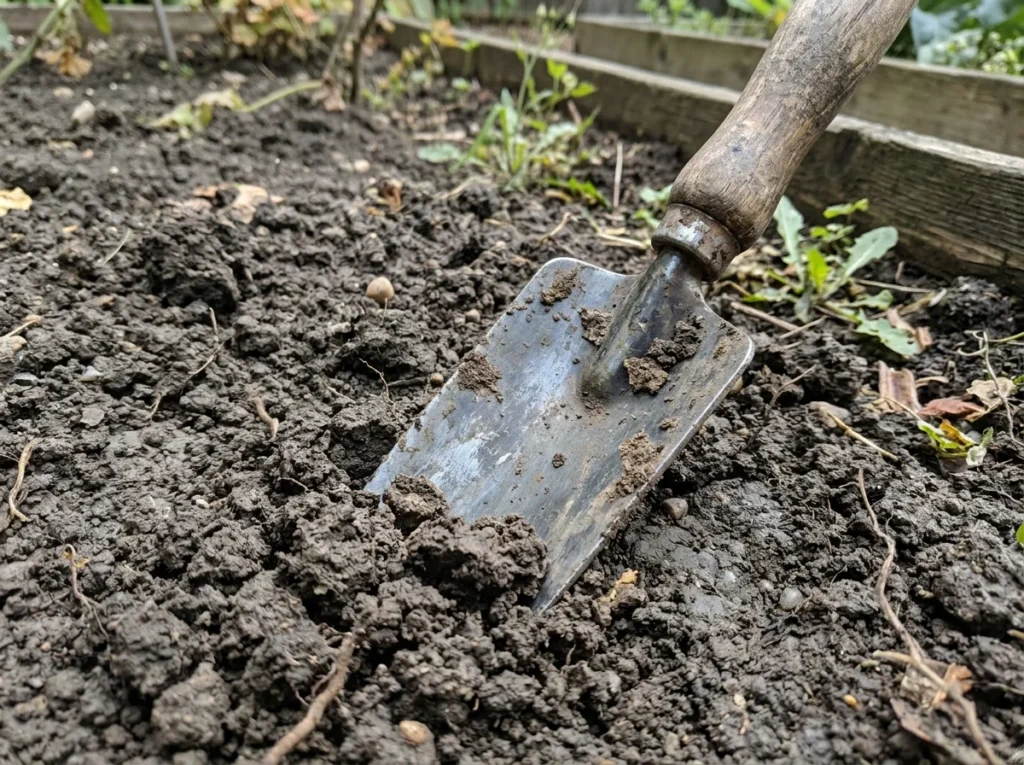
Clay and other heavy soils are where cheap trowels bend, and where a narrow or flimsy blade just smears the surface. You want a stout blade, a handle you can push without hot spots, and enough length to get under a root or a transplant. This guide compares four hand trowels that still resolve on Amazon, chosen for heavy soil rather than for soft potting mix alone.
As an Amazon Associate, The Garden Den earns from qualifying purchases.
For a wider look at trowel materials and everyday handles, see our durable garden trowel comparison. The four below are the ones to start with if your beds set up hard after rain, or if you garden in compacted fill.
What matters in a trowel for clay
Blade stiffness comes first. A stamped, thin blade will flex when you lever against clay. Forged or thicker carbon and stainless blades hold their shape. A slightly narrower, pointed blade enters heavy soil more easily than a wide, rounded scoop, though the wide scoop moves more loose soil once the bed is open.
The handle should let you push with your palm and keep your wrist fairly straight. A bent or contoured handle can help if you plant a whole row in one sitting. A smooth, skinny handle will twist in muddy gloves. A hang hole is handy. A full tang or a well-seated ferrule matters more, because that is the joint that loosens after a season of prying.
Work clay when it is slightly moist. If the surface is shiny and sticky, wait. If it is dry and cracked, water the spot, then come back. A good trowel still needs decent timing.
| Trowel | Build, from the listing | Best use |
|---|---|---|
| DeWit X-Treme hand trowel | Built for roots and planting | Prying in roots, compacted spots, and heavy beds |
| Fiskars Ergo trowel | Heavy-duty ergonomic handle | Long planting sessions in tough soil |
| Radius Garden 10011 | Ergonomic aluminum, red handle | Gardeners who want a lighter blade and an easier grip |
| Edward Tools carbon steel trowel | Carbon steel blade, ergonomic grip | A simple, stout scoop for general digging and planting |
DeWit X-Treme Hand Trowel
DeWit X-Treme Hand Trowel, Small, Garden Tool for Roots and Planting
Check price on Amazon
DeWit is a Dutch maker known for forged garden tools, and the X-Treme trowel is listed specifically for roots and planting. The blade is the kind you reach for when a transplant is packed into clay or when you have to cut around a tough root rather than scoop potting mix in a raised bed.
The listing marks it as small, so it is not the widest scoop in this group. That is a help in heavy soil, where a narrower blade starts more easily. If you want one trowel that can pry as well as plant, start here.
Best For: Clay, compacted beds, and planting among roots, when you want a forged-style tool from a known maker.
Pros:
- Listed for roots and planting, which is the hard work in heavy soil.
- A smaller blade is easier to start in clay than a wide scoop.
- DeWit is a long-standing tool brand, not a no-name listing.
Cons:
- The smaller size moves less loose soil once a hole is already open.
- A forged trowel is usually a bigger purchase than a basic hardware-store scoop.
Fiskars Ergo Garden Trowel
Fiskars Ergo Garden Trowel, Heavy Duty Hand Tool for Digging and Planting
Check price on Amazon
Fiskars sells this as a heavy-duty ergonomic trowel for digging and planting. The handle is the point of the design: a larger, shaped grip that is easier to push than a thin wood dowel, especially if arthritis or a long planting session is in play.
It is a practical everyday trowel if you already like Fiskars hand tools and want one that is labeled for heavier work, not just indoor potting. Wipe the blade after clay work so dried soil does not sit in the neck of the handle.
Best For: Long planting sessions and gardeners who want a larger, shaped handle in heavy soil.
Pros:
- Sold as a heavy-duty digging and planting trowel, not a thin indoor scoop.
- Ergonomic handle is easier to push with a gloved or tired hand.
- Easy to find if you already shop for Fiskars pruners or shovels.
Cons:
- The handle shape will not suit everyone, especially if you prefer a slim wood grip.
- As with most composite-handle tools, check the blade-to-handle joint after hard prying.
Radius Garden 10011 Ergonomic Aluminum Hand Trowel
Radius Garden 10011 Ergonomic Aluminum Hand Trowel, Red
Check price on Amazon
Radius Garden builds hand tools around an oversized, cushioned handle that you can hold with a more open grip. The 10011 trowel uses an aluminum blade, which keeps the tool lighter than a thick steel scoop. That helps if wrist or elbow comfort is the reason you have been putting off planting work.
Aluminum is not as hard as a forged steel blade. It is a fair trade if you need the handle more than you need a pry bar. For purely rocky, root-choked clay, the DeWit is the tougher blade. For long rows in heavy but workable soil, the Radius handle is the reason to pick this one.
Best For: Gardeners who want a lighter aluminum trowel and a large, easy grip in heavy soil.
Pros:
- Oversized ergonomic handle, the main reason people buy Radius hand tools.
- Aluminum blade keeps the weight down during repetitive planting.
- A well-known design, and one we can confirm on a current Amazon product page.
Cons:
- Aluminum will not take the same prying abuse as a forged or thick carbon-steel blade.
- The large handle feels bulky if you have smaller hands or already like a slim wood grip.
Edward Tools Garden Trowel, Carbon Steel
Edward Tools Garden Trowel, Heavy Duty Carbon Steel Garden Hand Shovel with Ergonomic Grip
Check price on Amazon
This is a carbon-steel hand shovel with an ergonomic grip, sold as a heavy-duty trowel. Carbon steel takes an edge and stands up to pushing in heavy soil, and it will rust if you leave it wet. Dry it off and it will serve as a simple, stout scoop for planting, weeding, and mixing amendments in a hole.
If you do not want to spend at the DeWit level and you do not need a specialty handle, this is a direct, no-frills option. It is the closest thing in this group to a classic steel trowel with a modern grip.
Best For: General digging and planting in heavy soil, when you want a carbon-steel blade without a specialty price.
Pros:
- Carbon steel blade listed as heavy duty, suitable for pushing into clay.
- Ergonomic grip is easier than a bare, skinny handle.
- A straightforward scoop for everyday bed work.
Cons:
- Carbon steel rusts if it is stored wet, so it needs a wipe after use.
- It is not a forged DeWit, and it is not a Radius-style oversized handle.
How to dig a planting hole in clay
Start with a smaller bite than you would take in loam. Push the point in, rock the blade, and lift a little at a time. If the trowel twists in your hand, reset your grip and take a narrower cut. For a transplant, dig a hole a bit wider than the root ball and roughen the sides so roots can exit into the bed. Slick, shiny clay walls act like a pot and keep roots circling.
Mix in compost in the backfill if the bed is very tight, but do not bury the plant in a deep bucket of fluffy mix surrounded by raw clay. That can create a sump. A fork to loosen the surrounding soil, then a trowel to plant, is a better pair. See our spading fork picks for clay soil if the bed itself still needs to be opened.
Frequently asked questions
Should I choose stainless or carbon steel?
Stainless resists rust and is easier to leave in a damp shed. Carbon steel is often a bit tougher to pry with and will stain if it stays wet. Either can work in clay if the blade is thick enough. The handle joint and the stiffness of the blade matter more than the alloy name on the listing.
Is a hori hori better than a trowel in clay?
A hori hori is a sharp, concave knife, useful for cutting roots, dividing, and slicing into tight soil. It is not as good as a trowel for scooping a planting hole or moving soil back around a root ball. Many people keep both. We have a separate review of the Nisaku NJP651 hori knife.
Why do inexpensive trowels bend in clay?
The blade is too thin, or the neck where the blade meets the handle is weakly joined. Clay puts a side load on that joint when you lever up. A bent trowel is usually finished. Replace it with a stiffer blade rather than trying to straighten it.
Bottom line
For the toughest clay and roots, the DeWit X-Treme is the most focused tool in this group. The Fiskars Ergo is the everyday heavy-duty handle. The Radius 10011 is the one to pick if comfort and weight matter more than prying strength. The Edward Tools carbon-steel trowel is a simple backup or first stout scoop. Time your work for soil that is just slightly moist, and use a digging fork on the bed when a trowel is no longer the right scale of tool.