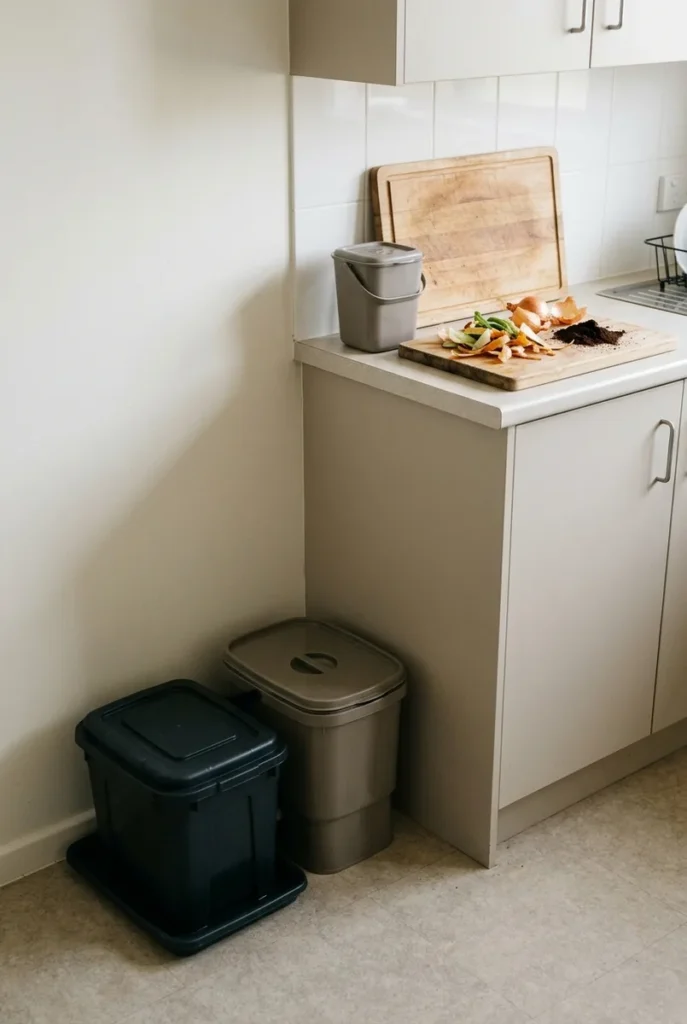
You can compost in an apartment by keeping a small worm bin or bokashi bucket indoors, storing scraps for a local collection, or using a balcony bin if your building allows it. Choose the option that fits your space, the scraps you produce, and what you can do with the material afterward. If you are new to composting, how to compost kitchen scraps covers the basics.
Key Takeaways
- Want the least hands on routine? Freeze food scraps and take them to a municipal or community drop off site, or use curbside collection if it is available to you.
- Want to process scraps indoors? A worm bin works with many fruit and vegetable scraps, coffee grounds, and paper tea bags without staples.
- Need to include meat or dairy? Bokashi accepts cooked food, meat, dairy, and small bones, but its fermented material still needs soil or a compost pile.
- Have no balcony? You can still compost with an indoor method or a collection service. You do not need outdoor space.
- Trying to control odors and fruit flies? Keep food covered, use a lid, and store scraps in the freezer between worm bin feedings.
Related guides
Compare the Four Apartment Composting Options
Before you pick an apartment composting bin or collection routine, think about what you want to accept and where the finished material will go. The table compares the four options, including the differences that matter most in a small home.
| Method | What it accepts | Space needed | Smell and pest risk | What you end up with |
|---|---|---|---|---|
| Indoor worm bin | Fruit and vegetable scraps, paper tea bags without staples, and coffee grounds, according to the US EPA. | Keep it indoors so worms do not freeze in winter or overheat in summer, as the US EPA advises. | Low if every feeding is buried under bedding and the lid stays on. Exposed food draws fruit flies. | Finished worm compost or castings for use in soil or a container mix. |
| bokashi bucket | Most food scraps, including cooked food, meat, dairy, and small bones (Washington State University Extension). | A bucket under the sink or in a closet. | Low while the lid seals. Flies inside mean the seal is leaking or food is exposed. | Fermented pre compost that still has to be buried in soil or finished in a compost pile. |
| Freezer or countertop container with collection | Follow the accepted materials list for your municipal or community drop off site or curbside collection. | Freezer space or a small countertop container, plus a way to carry scraps to the collection point. | Low in the freezer. A countertop container needs a tight lid and frequent emptying. | Scraps handed to the collection service or drop off site for processing. |
| Small balcony bin | Use only the materials accepted by your chosen setup and allowed by your building. | Balcony space, only where building rules permit a bin. | Plan for a lid, airflow, and excess moisture so you can manage the bin in a confined space. | Processed material that you need a plan to use or share. |
Indoor Worm Bins: A Good Fit for Fruit and Vegetable Scraps
Vermicomposting uses worms to break down food scraps in a bin. Keep the bin indoors so the worms do not freeze in winter or overheat in summer, advises the US EPA. If you want to keep learning about cold weather options, see our guide to composting in winter.
University of Maryland Extension recommends a plastic storage bin with a lid for indoor use. A bin about 21 by 15 inches and 5 to 8 inches deep handles about 2 to 3 pounds of kitchen scraps a week. Skip bins deeper than 15 inches, since they get heavy and the bedding packs down.
- Drill 1/4 to 1/2 inch holes in the bottom and lid for air.
- Raise the bin on bricks or scrap wood so air reaches the bottom.
- Set it on a tray to catch the liquid that drains out.
- Fill it with damp, shredded newspaper or cardboard as bedding before adding worms.
What goes in an indoor worm bin
| What to do | Materials or action | Source |
|---|---|---|
| Add | Fruit and vegetable scraps, paper tea bags without staples, and coffee grounds. | US EPA |
| Add slowly | Woody or dry items such as stems. Chop them small, since worms take longer to eat them. | US EPA, NYC Department of Sanitation |
| Leave out | Meat, bones, fat, and dairy. | US EPA |
| Leave out | Food cooked with oil, very salty or spicy food, and large amounts of citrus. | NYC Department of Sanitation |
| Leave out | Plastic tea bags, coffee filters, and produce stickers. Worms will not eat them. | US EPA |
If you want to see a compact tiered vermicomposting setup, take a look at our overview of an indoor worm bin system.
Bury each feeding in a small pocket under the bedding and cover all of it. Only add more food once the last batch has been eaten, the US EPA advises. The bin should smell earthy. A sour smell or soggy bedding usually means too much food or too much moisture.
Bokashi: An Indoor Method for Meat and Dairy Scraps
Bokashi is a sealed fermentation method that uses bran inoculated with microbes, according to Washington State University Extension (Kitsap County). It accepts cooked food, meat, dairy, and small bones, making it an option when those scraps do not suit a small worm bin.
How to use a bokashi bucket:
- Add scraps to the bucket.
- Sprinkle a handful of bokashi bran over each new layer.
- Press the layer down to push out air, then seal the lid tightly.
- Drain the liquid every few days so it does not start to smell.
- When the bucket is full, leave it sealed for about two weeks.
The result is fermented pre compost, not finished compost. It must be buried in soil or added to a compost pile; if you live in an apartment, Washington State University Extension says you can mix 1 part bokashi with 3 parts soil in a lidded tote and let it sit for 3 to 6 weeks.
Store Scraps for a Local Drop Off or Collection
If you do not want to manage a worm bin or bokashi bucket, use a freezer or countertop scrap container and take the contents to a municipal or community food scrap drop off site, or set them out for curbside collection. Check your city or county website for available options and the materials each program accepts.
Collection rules can differ, so look up the instructions before adding bags, soiled paper, or less common scraps. Do not assume a material accepted by one program will be accepted by another.
Choose a freezer if you have room and prefer to store scraps until your next trip. If freezer space is tight, use a countertop container and plan how often you can take it out, especially if the drop off site is not easy to reach.
For a shared kitchen, set aside a designated container and decide who will empty it and handle transport. A simple plan helps prevent scraps from sitting out while everyone assumes someone else will take them.
Use a Balcony Bin Only if Your Building Allows It
Check your lease and building rules, or ask the landlord, before you put a compost bin outside. Many buildings limit what can sit on a balcony, and a leaking bin can drip onto the unit below.
- Set the bin on a level surface with a tray under it, away from drains and the balcony edge.
- Use a bin with a secure lid and air holes covered with fine mesh to keep pests out.
- Cover each addition of food scraps with dry browns such as torn cardboard or shredded paper.
- Keep the contents damp but not soggy. If it smells sour or feels wet, add more dry browns.
- Expect a small outdoor bin to slow down a lot in cold weather.
Stop Smells and Fruit Flies in a Small Kitchen
- Keep food covered. Bury every worm bin feeding under bedding. The US EPA says exposed food attracts fruit flies and covered scraps do not.
- Store scraps cold. The NYC Department of Sanitation worm bin guide suggests keeping scraps in the freezer or refrigerator between weekly feedings. Freezing fruit first also helps kill fruit fly eggs.
- Do not overfeed. University of Maryland Extension says odors usually come from adding too much food at once. Remove rotting food and skip feeding for a week.
- Dry out a wet bin. Add fresh dry bedding and stir to let air in, and check that the drainage holes are clear.
- Trap the flies you already have. Flypaper on the underside of the lid or a yellow sticky card next to the bin catches adults.
- Keep bokashi sealed. Add bran right after each batch of food, open the bucket briefly, and wipe the rim so the lid seals.
Make a Plan for the Finished Material
Finished worm compost or castings can be one ingredient in a container mix. Use our potting mix calculator to plan a container blend, and read how compost and fertilizer serve different roles in soil.
Bokashi needs additional processing before it is finished compost: bury it in soil, add it to a compost pile, or use the lidded tote method described above. If you do not have plants or a place to finish it, arrange a recipient before starting, such as a neighbor who gardens or a community garden that accepts it.
Apartment Composting Checklist
- Choose between an indoor worm bin, Bokashi, collection or drop off, and a balcony bin permitted by your building.
- Check city or county rules for accepted scraps, bags, and soiled paper before using a collection program.
- Decide where finished compost or fermented pre compost will go before you start.
- Worm bin: lidded plastic bin, air holes, a drip tray, and damp shredded paper bedding.
- Bury every feeding and wait until it is eaten before adding more.
- Keep scraps in the freezer or fridge between feedings.
- Bokashi: bran on every layer, lid sealed, liquid drained every few days.
- Balcony bin: written permission or building rules checked first.
Summary
Pick the method that fits your routine and has a clear destination for the scraps or finished material. Choose an indoor worm bin for suitable fruit and vegetable scraps, bokashi for a broader range of food, collection for a low maintenance routine, or a balcony bin only when your building permits it.
Frequently Asked Questions
What is the laziest way to compost in an apartment?
Freezing scraps and taking them to a municipal or community drop off site, or using curbside collection, involves less home processing than running a worm bin or bokashi bucket. A designated lidded container helps keep odors and fruit flies down while scraps wait for collection.
Which apartment composting method works without a balcony?
An indoor worm bin, a bokashi bucket, or a freezer and collection routine can all work without a balcony. Choose based on the kinds of scraps you want to handle and whether you have a place to finish or deliver the material.
Does an apartment worm bin smell?
A healthy bin smells earthy. University of Maryland Extension says odors usually mean too much food went in at once. Remove rotting food, skip feeding for a week, and add dry bedding if it is wet.
How much food can a small indoor worm bin handle?
University of Maryland Extension says a plastic bin about 21 by 15 inches and 5 to 8 inches deep handles about 2 to 3 pounds of kitchen scraps a week. Add food only after the previous feeding has been eaten.
Can I put bokashi material straight into a container plant?
No. Bokashi is fermented pre compost, not finished compost. Washington State University Extension describes burying it in soil or mixing 1 part bokashi with 3 parts soil in a lidded tote and letting it sit for 3 to 6 weeks.
What can I do with finished compost if I do not have plants?
Ask a neighbor who grows plants or a community garden whether they can use it. For bokashi, arrange a place to finish the fermented material before you begin, since it needs soil or a compost pile.
What should you not put in an indoor worm bin?
Leave out meat, bones, fat, and dairy (US EPA), plus oily cooked food, very salty or spicy food, and large amounts of citrus (NYC Department of Sanitation). If you want to compost those foods, bokashi accepts them.