For highbush blueberries, aim for a soil pH of about 4.5 to 5.2, with some extension guidance giving a broader range of 4.5 to 5.5. Penn State Extension describes 4.5 to 5.0 as optimal, with up to 5.2 in clay soil, while Oregon State University Extension Service lists 4.5 to 5.5. Test the soil before you amend, then give any adjustment time to work.
Key Takeaways
- Blueberries need acidic soil, and a target near pH 4.5 to 5.2 suits many highbush plantings.
- Test soil before adding elemental sulfur or another amendment. A pH reading alone does not determine the right treatment.
- Elemental sulfur is the usual long-term soil amendment for lowering pH. Changes take months, so retest before applying more.
- High pH can reduce iron and other nutrient availability. Yellow leaves can have causes beyond soil pH, so confirm the problem.
- Regular irrigation can affect soil pH. Test water alkalinity as well as its pH if you use the same water source often.
- If native soil is strongly alkaline or difficult to adjust, grow blueberries in a raised bed or container with an acidic growing mix.
Free Printable Worksheet (PDF)
Print or save the one-page companion to this guide: Blueberry Soil pH Target and Testing Checklist. It collects the key tables and the checklist from this article.
Related guides
Why blueberries need acidic soil
Blueberries do best in acidic soil because pH affects how readily roots can take up iron and other nutrients. When pH is too high, nutrients may be present in the soil but less available to the plant, which can limit healthy growth.
Oregon State University Extension Service states that nutrients such as zinc and iron have limited availability when soil pH is above 7.5. That does not mean every blueberry with yellow leaves has a pH problem, but it shows why testing matters before you add fertilizer or an acidifier.
Organic matter and good drainage also help blueberry roots. Compost can support soil structure, but it is not a dependable pH correction; our guide to what compost and fertilizer do for garden soil explains how those two amendments serve different purposes.
Soil pH can affect other plants in different ways. For example, pH influences flower color in some hydrangeas, as explained in our guide to hydrangea bloom color and soil pH, but blueberry roots need the right pH for nutrient access.
Blueberry soil pH ranges and what they mean
Extension recommendations vary a little, so use your local soil test guidance when it gives a crop-specific target. The table shows how to think about common readings without treating one number as a complete amendment plan.
| Soil pH | What it means for blueberries | What to do |
|---|---|---|
| Below 4.5 | Below the main target range used by many extension recommendations. | Do not add more acidifying material. Test again and follow local extension or laboratory guidance before trying to raise pH. |
| 4.5 to 5.0 | Within Penn State Extension’s stated optimum range for blueberry growth. | Maintain the soil and avoid unnecessary pH amendments. |
| 5.0 to 5.2 | Penn State Extension notes that the optimum can extend to 5.2 in clay soil. | Use the soil report and soil texture to decide whether any adjustment is needed. |
| 5.2 to 5.5 | Oregon State University Extension Service lists blueberry and cranberry at 4.5 to 5.5. Oregon State University Extension Service | Check your local recommendation and test report before adding an acidifier. |
| Above 5.5 | Above the ranges listed by the extension sources cited here. | Get a soil-specific amendment recommendation, especially if the site is alkaline or strongly buffered. |
The ranges in the table come from Penn State Extension’s blueberry guidance and Oregon State University Extension Service’s pH recommendations. Soil texture and local conditions matter, so an amendment rate should come from your test report rather than a general rule.
Test the soil before choosing an amendment
A soil test is the no-fuss starting point for blueberry soil pH. Take samples from several spots in the planting area at a consistent depth, avoid unusual spots such as compost piles, and mix the samples together if the area has been managed as one bed.
Use a soil test that reports pH and gives amendment recommendations. A basic pH reading can show whether the soil is acidic or alkaline, while a laboratory report can help account for soil conditions that affect how much amendment is needed. Our guides to testing garden soil pH at home and soil test kit options explain different ways to check a sample.
A handheld soil pH meter can help you monitor a bed, but it is not a substitute for a soil test report when you need an amendment recommendation. If you use a meter, follow its instructions and keep the probe clean; our soil pH meter guide covers what this type of tool measures.
Keep separate samples for areas with different soil, drainage, or amendment histories. That way, a problem in one section does not lead you to treat the whole blueberry planting the same way.
Lower soil pH safely and give sulfur time
Elemental sulfur is the usual long-term way to lower soil pH in a garden bed. Soil microbes gradually convert it into forms that acidify the soil, so the change takes months, not days.
Start with the soil test report and follow its rate for your current pH and soil conditions. Texture and soil buffering capacity matter: some soils resist a pH change more than others, so applying a generic amount can leave the soil unchanged or push it too far.
For a new planting, Ohio State University Extension’s sulfur guidance says to mix the material through the top 4 inches of soil three months before planting. Follow your own test report and local extension recommendations for the amount and timing. Around established bushes, avoid disturbing shallow roots while applying any amendment.
Do not use lime around blueberries. Lime raises pH, which moves the soil in the wrong direction for this crop. If a test shows that the soil is already too acidic, stop sulfur and other acidifying products, retest, and ask your local extension service for a crop-appropriate response.
Vinegar poured onto soil or roots is not a safe, lasting way to manage blueberry soil pH. Coffee grounds and other organic materials can be useful in some garden settings, but they do not provide a reliable, measured pH correction. Use elemental sulfur only when your test report calls for it.
| Step | What to do | Why it matters |
|---|---|---|
| Test first | Collect a representative sample and request pH and amendment guidance. | A reading alone does not account for soil texture or buffering capacity. |
| Choose the right response | Use elemental sulfur to lower pH only when the test report recommends it. | Different soils need different amendment amounts. |
| Apply carefully | Follow the report and local extension instructions, especially around established roots. | Overapplication can make the soil too acidic or injure roots. |
| Wait and retest | Allow months for sulfur to work, then test the soil again before making another change. | Retesting helps you measure the result and avoid correcting too far. |
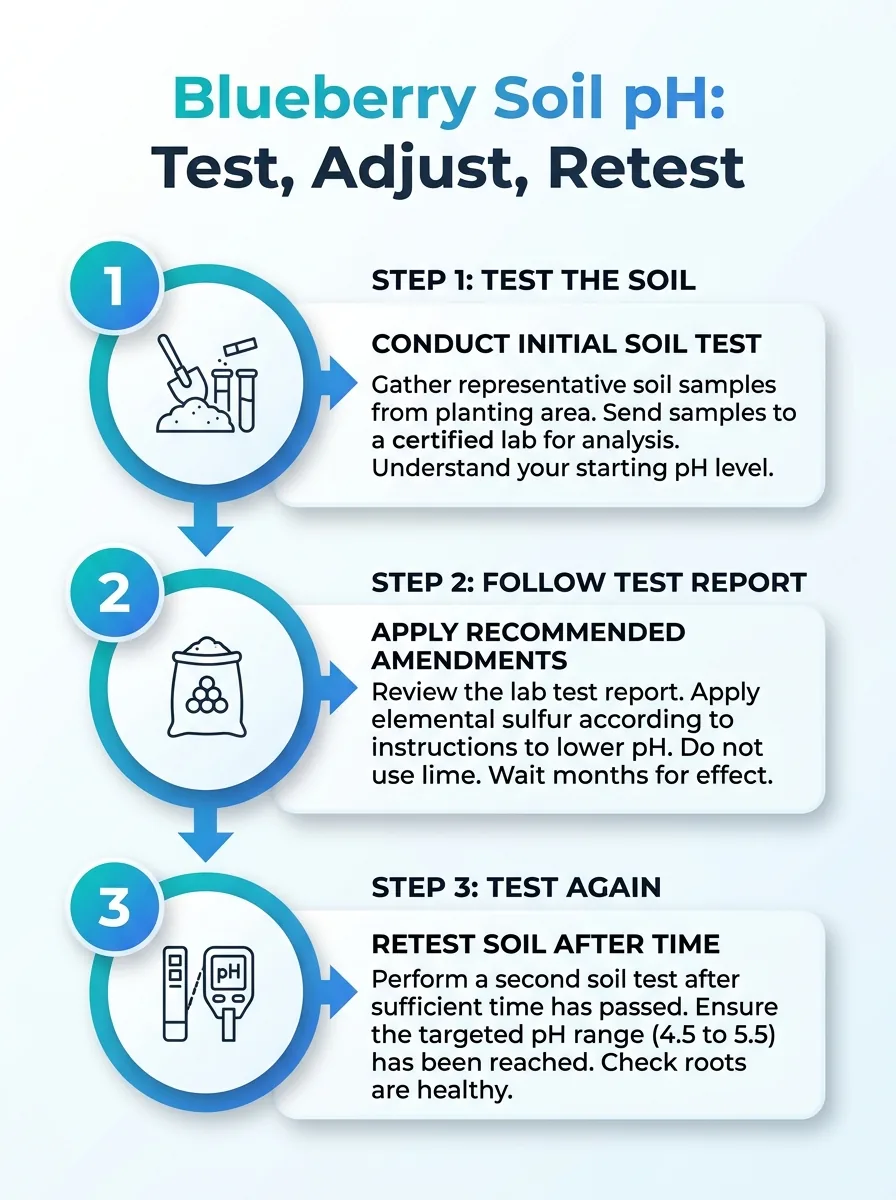
A step-by-step look at testing blueberry soil pH, making adjustments, and retesting to help roots access nutrients.
Check soil texture, organic matter, and drainage
Soil texture affects how quickly pH changes after an amendment. Sandy soil may respond differently from clay or soil high in organic matter, and soil with greater buffering capacity can resist a change. That is why two beds with the same starting pH may need different treatment.
Blueberries need moisture, but their roots also need well-drained soil. Adding suitable organic matter can help support soil structure, while a soggy planting spot can stress roots even when pH is in range. Do not use compost as a substitute for a soil-specific pH amendment.
Check irrigation-water alkalinity, not pH alone
Water pH and water alkalinity are different measurements. PH describes how acidic or alkaline water is at the time of testing, while alkalinity indicates how much acid-neutralizing material the water contains.
If you water blueberries regularly from a well or municipal supply, ask for an alkalinity or bicarbonate test. Water with higher alkalinity can gradually raise soil pH even when its pH reading alone does not seem extreme. Oregon State University Extension Service discusses water and soil acidification as part of managing blueberry plantings.
Do not add vinegar to irrigation water based only on its pH. Test the water first, then follow local extension guidance for managing alkalinity safely.
Confirm symptoms before treating the plant
Iron chlorosis can appear as yellowing leaves, sometimes with greener veins, when iron is not available to the plant. High soil pH is one possible cause, but poor drainage, root damage, other nutrient issues, and pests can also affect leaf color and growth.
Check soil pH before applying sulfur or an acidic fertilizer. If the reading does not explain the symptoms, ask a local extension service about plant or leaf testing and inspect the roots and drainage. Treating a symptom without confirming its cause can make the soil problem worse.
Use raised beds or containers when native soil is difficult
A raised bed can be a more manageable option when native soil is strongly alkaline, poorly drained, or difficult to amend. Fill it with a suitable acidic growing mix and keep its soil separate from surrounding ground where practical.
Container blueberries should grow in an acidic potting mix, not ordinary garden soil or a lime-based mix. Containers also make it easier to keep the root zone distinct from unsuitable native soil, but they still need monitoring and periodic soil testing.
Keep pH steady after planting
Retest after sulfur has had time to work, and use the new result before making another adjustment. Keep notes about the test date, amendment, and application area so you can compare results instead of relying on memory.
Acidic fertilizers can support routine feeding of acid-loving plants, but they are not a measured replacement for elemental sulfur when a soil test calls for a pH correction. If you are comparing fertilizer types, see our guides to organic fertilizer for acid-loving plants
and granular acid-mix fertilizer
.
When regular irrigation or fertilizer use may affect the bed, check pH again rather than continuing to acidify by habit. A follow-up soil test gives you a clear next step and helps prevent an unnecessary pH swing.
Field Checklist for blueberry soil pH
- Collect a representative soil sample before planting or amending.
- Record the soil pH and read the report’s crop-specific recommendations.
- Consider texture, drainage, and soil buffering capacity before choosing an amendment.
- Use elemental sulfur only when the soil test calls for a pH decrease.
- Do not use lime around blueberry plants or pour vinegar onto soil or roots.
- Check irrigation-water alkalinity if you use the same water source often.
- Wait months after applying sulfur, then retest before making another change.
- Use an acidic potting mix for container blueberries, not garden soil or a lime-based mix.
Summary
Blueberry Soil pH starts with a target near 4.5 to 5.2, a representative soil test, and an amendment plan based on the report. Use elemental sulfur only when recommended, give it months to work, and retest before making another change.
Frequently Asked Questions
Can coffee grounds lower soil pH enough for blueberries?
Coffee grounds are not a reliable, measured way to lower blueberry soil pH. Use a soil test to decide whether elemental sulfur is needed.
Can I use rainwater for container blueberries?
Rainwater can reduce reliance on a regular water source that has high alkalinity. If you are managing a pH problem, test the water and potting mix; rainwater alone may not correct it.
Is a soil pH above the target automatically a problem?
No. Oregon State University Extension Service lists 4.5 to 5.5 for blueberries, though other extension recommendations use a narrower target. Consider the plant’s growth and your local soil test guidance before changing the mix.
Should I add sulfur to the mulch around a blueberry bush?
Do not use mulch as a substitute for applying a soil amendment according to the test report. Keep amendment away from stems and shallow roots unless your local instructions specify an application method.
What should I do if blueberry leaves stay yellow after correcting soil pH?
Check drainage, root health, and the possibility of other nutrient problems before applying more acidifier. A soil test or plant tissue test can help identify the cause when leaf symptoms continue.
Download the Companion Printable Sheet (PDF)
Print or save the one-page companion to this guide: Blueberry Soil pH Target and Testing Checklist. It collects the key tables and the checklist from this article.
Published by The Garden Den, a publication of Viking Trading Group LLC.